
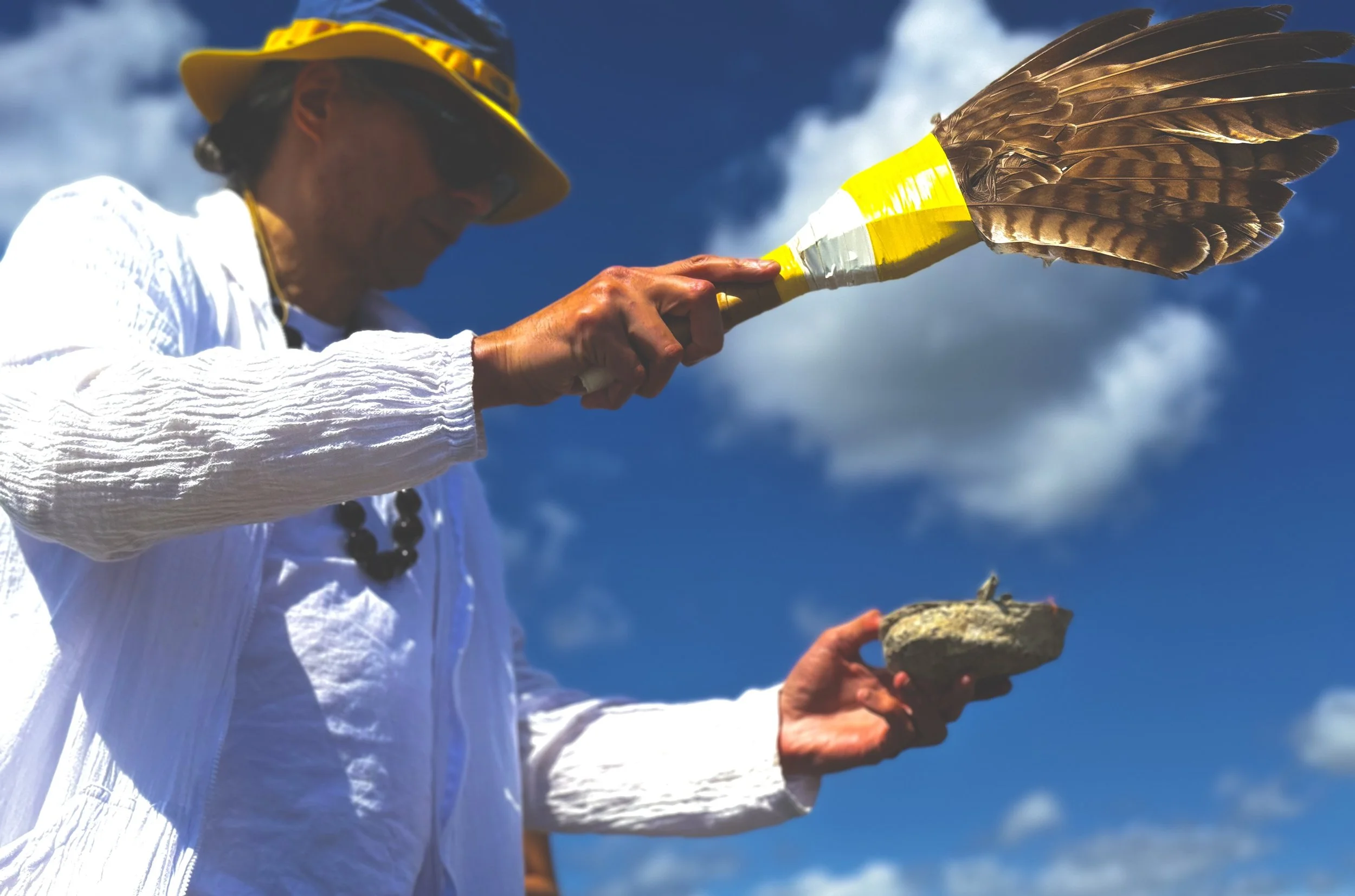
For generations, Indigenous communities across New England have carried cultural practices that are too often overlooked, misunderstood, or spoken about only in the past tense. Ohketeau Cultural Center (OCC) is helping create space for Indigenous voices, visibility, and belonging in the present day.
Founded by Larry Spotted Crow Mann, the Indigenous-led organization centers cultural preservation, healing, education, and relationship-building across communities. From public conversations and cultural workshops to youth engagement, wellness initiatives, and collaborations across Massachusetts and beyond, OCC’s work is rooted in a simple but powerful belief: Indigenous communities are not historical artifacts — they are vibrant, evolving communities shaping the present and future.
“The inspiration came from recognizing how often Indigenous people in New England are either erased, misunderstood, or only acknowledged in historical terms,” Mann shared. “We wanted to create a living, active space where Indigenous culture is not viewed as something from the past, but as vibrant, evolving, and deeply connected to community wellness today. At its heart, OCC is about reciprocity, education, and making sure Indigenous people have spaces where they are centered, respected, and empowered.”
Creating Space for Indigenous Visibility and Wellness
Today, OCC’s work spans cultural workshops, public speaking, environmental conversations, youth engagement, wellness programming, and collaborations with schools, municipalities, nonprofits, and grassroots organizations. Across its work, the organization focuses on creating opportunities for Indigenous perspectives to be meaningfully included, not simply acknowledged symbolically.
“We’re proud of the relationships we’ve built with organizations that want to move beyond performative inclusion and engage in meaningful learning and partnership,” Mann said. “What ties all these efforts together is the belief that Indigenous voices belong in every conversation about community, wellness, history, and the future.”
That commitment to community wellness has become an increasingly important part of OCC’s work. Through partnerships and health-centered initiatives, the organization has helped create spaces that connect cultural knowledge, healing, and peer support. “Indigenous wellness is not just physical,” Mann explained. “It is cultural, spiritual, environmental, emotional, and communal.”
This holistic understanding of wellness informs many of OCC’s collaborations and initiatives, which often sit at the intersection of cultural enrichment, community care, education, and relationship-building. Whether engaging with youth, supporting conversations around mental health and wellbeing, or creating opportunities for Indigenous storytelling and cultural learning, OCC’s work consistently centers community connection and belonging.
The Power of Representation
One of OCC’s most visible initiatives in recent years has been Natives Run, which has helped bring Indigenous representation and visibility to one of the world’s most celebrated athletic events: the Boston Marathon. For Mann, the initiative carries both historical and deeply personal significance.
“Most people do not realize that nearly 20 miles of the marathon route follows an ancient Nipmuc trail — pathways our ancestors traveled long before there was ever a marathon,” he explained. “And until recently, there had never been a Nipmuc runner represented in the Boston Marathon.”
What began as an opportunity through a partnership with the Boston Athletic Association quickly became something much larger: “a movement rooted in visibility, healing, pride, and Indigenous presence.”
“This whole experience has been absolutely mind-blowing,” Mann said. “For many participants, this experience created a profound sense of belonging. Indigenous people saw themselves represented in a space that historically had never acknowledged them in this way, while non-Indigenous communities were able to witness Indigenous resilience, strength, and contemporary identity through a different lens.”
The initiative has also helped expand conversations around what wellness and visibility can look like for Indigenous communities. For Mann, the impact goes far beyond the race itself. “When I reflect on the Natives Run initiative, I think deeply about my own community — the generations of barriers, the lack of opportunities and resources, and the struggles so many Native people have faced simply trying to find where they belong,” he shared. “Then suddenly, here we are: not on the sidelines, but in the Boston Marathon itself.”
Most importantly, Mann says the visibility created through initiatives like Natives Run can help reshape what younger generations believe is possible.
“Somewhere out there right now is a Native youth watching this unfold,” he reflected. “Maybe they are carrying struggles of their own. Maybe they are standing at a crossroads. But now, instead of believing certain doors are closed to them, they can see another path forward. That is what changing the narrative of Indigenous presence can do.”
Rooted in New England
Being rooted in New England deeply shapes OCC’s work and sense of responsibility to community. Mann, a Nipmuc tribal citizen, says much of OCC’s work involves helping people reconnect with the Indigenous histories and living communities that remain deeply tied to the region.
“Many people don’t realize Indigenous communities are still here, still active, and still contributing to the cultural fabric of this region,” he said. “Our work is about helping reconnect people to that truth while building relationships grounded in local history, land, and community responsibility.”
For Mann, sharing those histories is deeply personal and important. “The traditional stories, alongside the lived experiences of our people since the time of settler colonialism, remain deeply important,” he shared. “From King Philip’s War to my own direct ancestors who served as Revolutionary War soldiers helping found this country — yet are rarely acknowledged, if mentioned at all — these histories deserve to be remembered.”
“These are not side stories to American history,” he added. “They sit at the heart of this nation and carry a profound message about resilience, sacrifice, survival, and who we are as a people.”
Building Sustainable Infrastructure for Community-Centered Work
As OCC continues to grow as an independent nonprofit organization, Mann says one of the biggest lessons has been the importance of building infrastructure that reflects the organization’s values.
“We’ve learned the importance of building infrastructure that reflects care, reciprocity, and accountability; not just efficiency,” he said. “Leadership is not about individual recognition. It’s about creating opportunities for collective growth and ensuring the work remains grounded in community needs.”
OCC currently works with TSNE through its Shared Services model for operational and administrative support. Mann says that partnership has helped provide stability while allowing the organization to stay focused on programming and community engagement.
“Having support with areas like payroll, compliance, and administrative systems allows us to dedicate more time and energy toward programming, partnerships, and community engagement,” he explained. “For a growing organization, that kind of support is incredibly valuable because it helps create sustainability while reducing burnout.”
He also emphasized how important it has been to have guidance while navigating the realities of operating and growing a nonprofit organization.
“We learned so many things about the ins and outs — and are still learning — of the operational structures of organizations,” Mann shared. “The TSNE staff have been wonderful, responsive, and very giving in supporting our organizational learning curve.”
Looking Ahead
Looking toward the future, OCC continues to expand its educational programming, cultural initiatives, wellness collaborations, and community partnerships. The organization is also working toward establishing a permanent physical home on Massachusetts’ North Shore — a space that could further strengthen and sustain its growing work for future generations.
But at the center of all of that growth is a simple philosophy Mann returns to often: Pass it on.
“To me, leadership is not about holding knowledge only for yourself,” he said. “It is about passing on what you know, creating opportunities for others, and helping build spaces where future generations can grow, flourish, and eventually carry this work forward in their own way.”
Most importantly, we are excited to continue building relationships,” he added, “because real change happens through community, collaboration, and the collective willingness to imagine a more equitable future together.”
Learn more about the Ohketeau Cultural Center: https://www.ohketeau.org/
Learn more about TSNE’s Shared Services: https://tsne.org/our-services/shared-services/